
Why We Hike
Why Hiking Is One of the Most Powerful Resets You Can Give Yourself
Hiking doesn’t look radical. It’s not high-intensity. It’s not optimised. It doesn’t promise transformation in six weeks. It’s just walking - in places big enough to shift your perspective. And yet, few things reset the body and mind as effectively.
In a culture of constant input, hiking does something rare: it reduces noise. Physically. Mentally. Socially. It asks only that you move forward. And that simplicity is its power. Modern life isn’t necessarily hard; it’s just saturated - notifications, deadlines, decisions, tabs open everywhere.
Walk for several hours through open landscape and something changes. The brain settles into rhythm, thoughts begin to organise themselves. You’re not forcing insight, you’re giving it space. One of the most overlooked mental benefits of hiking is perspective. Problems that felt urgent at a desk feel proportionate on a hillside. Decisions soften, internal noise quietens. It’s not escape, it’s recalibration.
It strengthens the body without punishment. Hiking builds real, usable strength. You climb, you descend, you stabilise over uneven ground. You use your lungs properly, you carry your own weight. Unlike gym-based exercise, hiking doesn’t isolate muscle groups, it works the body as a system. Leg strength improves, cardiovascular endurance increases, balance sharpens and bone density benefits from load-bearing movement.
But the key difference is this: hiking challenges without punishing. There’s effort, but not aggression. That makes it sustainable, especially for women who want strength without burnout. It regulates your nervous system. And then there’s that specific, beautiful kind of tired you only get after a long walk - not wired, not depleted, just grounded.
Time outdoors lowers stress hormones. Repetitive forward movement settles the nervous system and exposure to natural light improves sleep cycles. You finish the day physically used but mentally clear. A reset you feel in your body and your mind.
And the shift isn’t only internal. Hiking also changes the quality of conversation. Walking side by side removes pressure. Conversation flows when you’re not sitting opposite someone, silence doesn’t feel awkward and depth arrives without force. Shared terrain creates a subtle connection. You’ve climbed the same hill, stopped at the same viewpoint and felt the same wind. You don’t need icebreakers; the walk does the work.
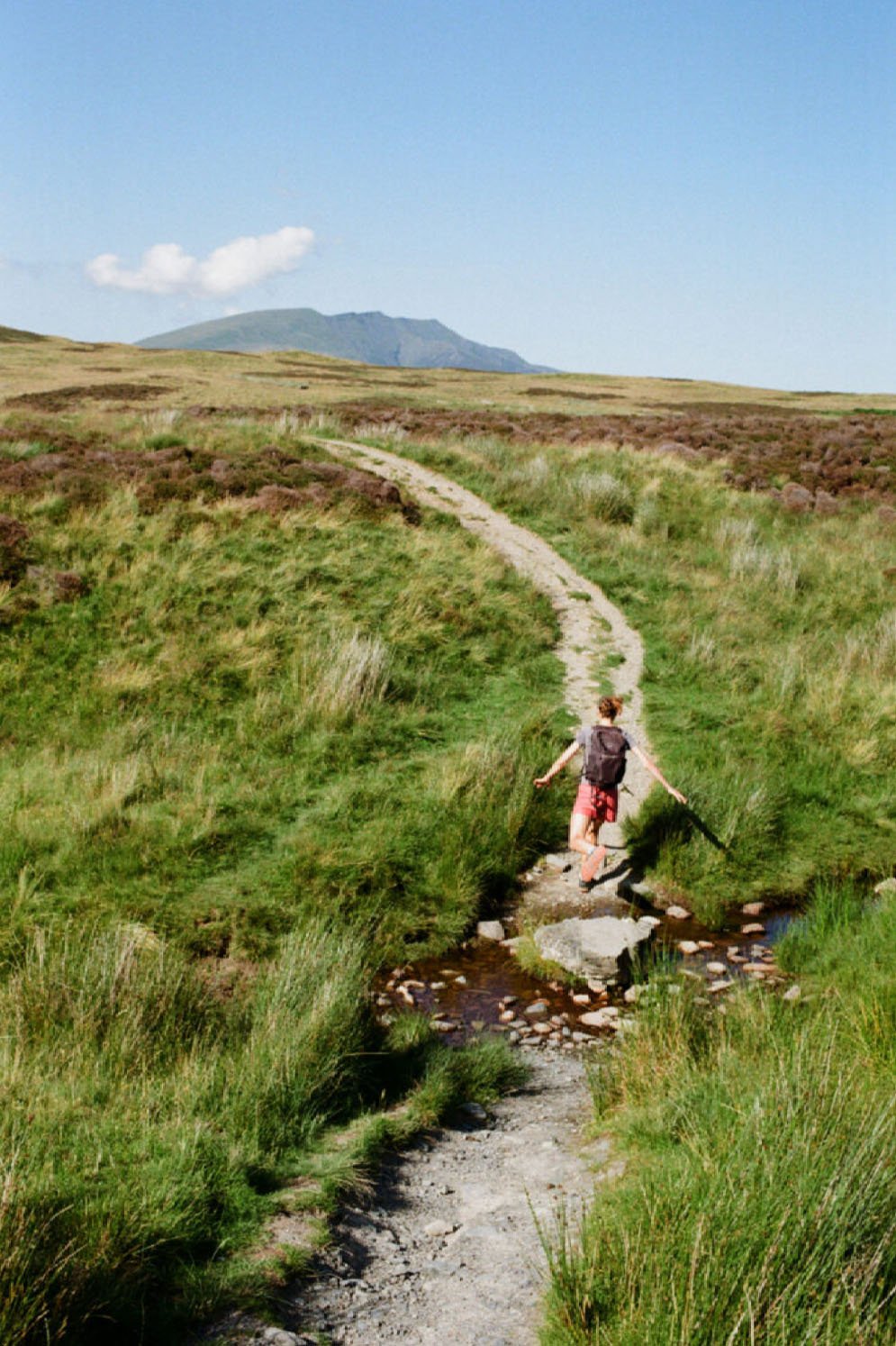
It reminds you of your own pace. Hiking isn’t about speed. It’s about rhythm. Step, breath, step, breath. In moving at a human pace through landscape, you remember something simple: you are capable, you can endure effort, you can keep going.
That quiet competence is powerful. Not dramatic, but steady. Hiking doesn’t promise reinvention, it offers something better - clarity, capability and space. And in a world that rarely slows down, that might be the most powerful reset available.